
As 3D printing continues to grow, so does the amount of PLA waste generated through failed prints, support structures and filament scraps. While additive manufacturing produces significantly less waste than traditional manufacturing, most printed PLA still ends up in landfill.
A UK initiative is helping change that.
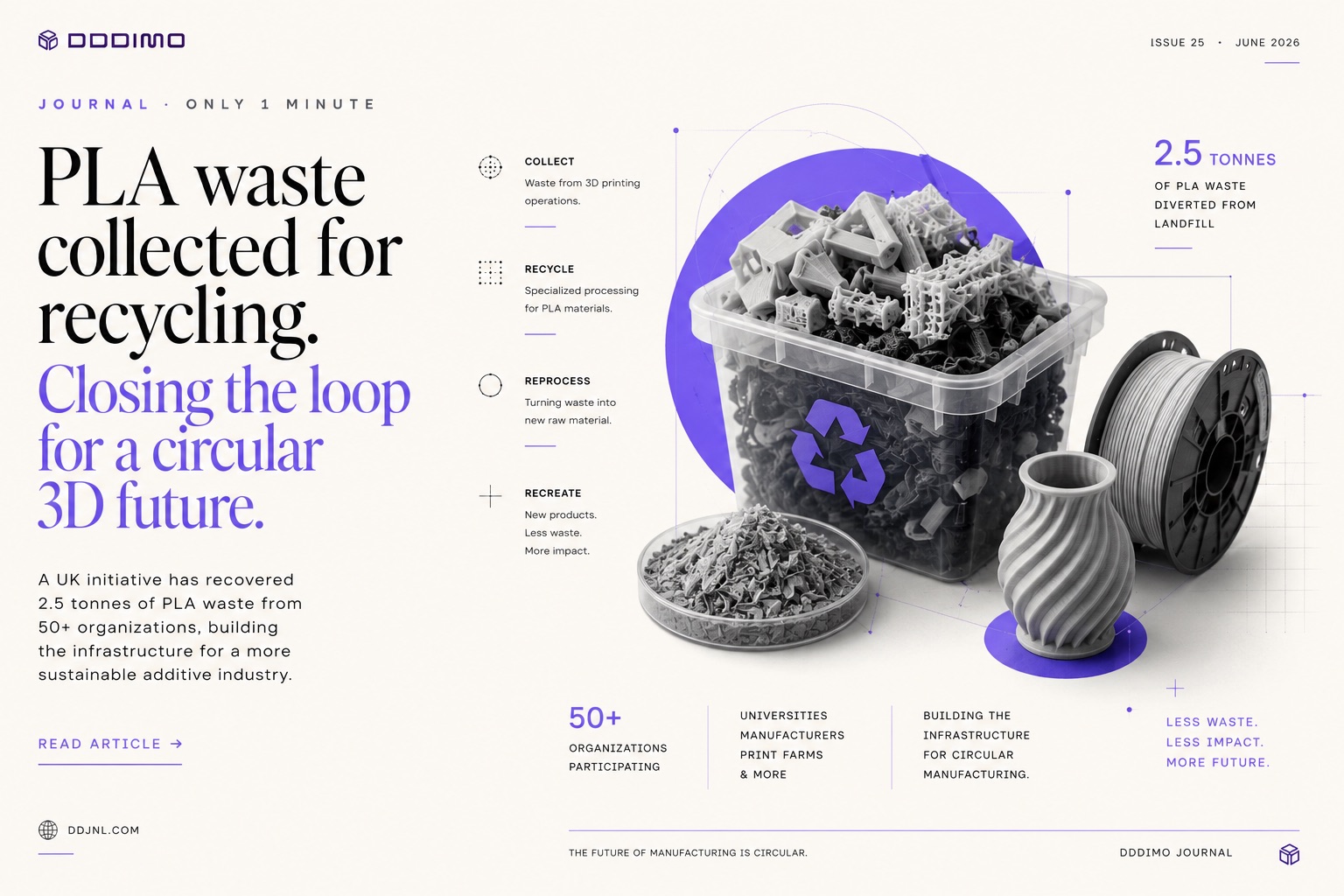
Filament manufacturer Filamentive, in partnership with specialist recycler 3D Printing Waste (3DPW), has recovered more than 2.5 tonnes of PLA waste from over 50 organizations, including universities, manufacturers and professional print farms.
Despite its reputation, PLA is not biodegradable under normal environmental conditions. Without dedicated recycling infrastructure, most 3D printing waste cannot be processed through conventional municipal recycling systems.
The initiative reflects a broader shift across the additive manufacturing industry. Beyond producing parts more efficiently, companies are beginning to invest in material recovery, closed-loop recycling and circular manufacturing.
The numbers themselves aren't the biggest milestone.
The infrastructure is.
Dedicated recycling networks for 3D printing waste remain rare, making programs like this an early indicator of how the industry is evolving toward a more sustainable and circular manufacturing ecosystem.
As additive manufacturing continues to scale, recycling infrastructure could become just as essential as filament production, print farms and digital marketplaces.
The future of 3D printing won't be defined only by what we manufacture. It will be defined by what we choose to recover.