
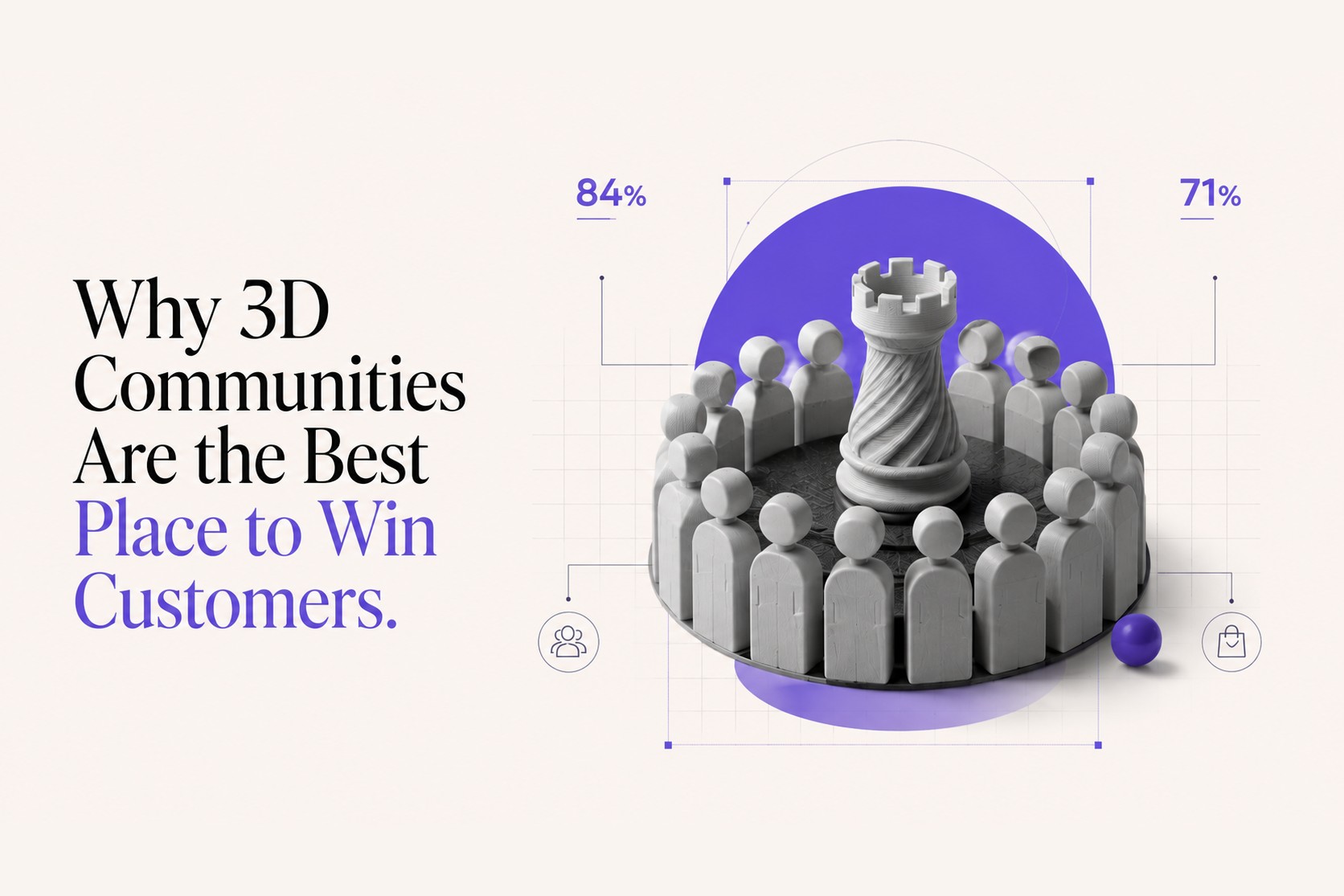
In 2024, a McKinsey study found that 84% of Gen Z trusts reviews from niche online communities more than traditional advertising. And according to the Edelman Trust Barometer, 71% of global consumers say trust is the deciding factor between buying from or ignoring a brand.
The message is clear: people buy from those they trust, and that trust is built inside communities.
What does it mean to promote through communities?
It's not spam. It's not jumping into a forum and dropping your store link. It's genuinely participating in the conversations where your audience already is: 3D printing groups on Reddit, modeling forums, maker communities on Discord, Facebook groups dedicated to filaments or resin.
The logic is simple: when you answer a question about print supports, share a timelapse of your process, or explain which slicer you use and why, people start recognizing your name. And when they recognize your name, they visit your profile. And when they visit your profile, they find your store.
5 practical steps to get started
- Pick one community and focus on it. Don't try to be everywhere. Choose the forum or group where your type of product is most discussed. If you sell miniatures, join tabletop and RPG groups. If you sell functional parts, look for engineering and DIY communities.
- Contribute before you promote. Answer technical questions, share printing tips, comment on other people's work. A ChannelEngine report surveying 470 sellers found that 29% consider product discoverability the biggest challenge on marketplaces. The solution is genuine presence where buyers already are.
- Show your process, not just the final product. "How I made this" posts generate more engagement than a catalog of photos. Show your failed tests, design iterations, and material choices. Socially Powerful documented that the trend for 2025 is authentic content and real participation, known as forum marketing, because Gen Z prefers real conversations over polished ads.
- Speak the community's language. Every group has its own vocabulary. Pay attention to the words members use to describe their problems and needs. Then use that same language in your product descriptions. This improves both human connection and search engine discoverability.
- Be consistent, not viral. You don't need a post with thousands of likes. You need to show up every week, be helpful, and be recognized. That's how reputation is built in any community, online or offline.
Why does this work in 3D?
The 3D ecosystem is communal by nature. People share files, exchange settings, debate materials, and show off their prints. According to Flywheel Digital, the social commerce market is projected to grow 56% in 2026 alone, driven by exactly this model where content, discovery, and purchase happen in the same space.
If you sell in 3D, you're already inside one of the most active communities on the internet. The question is: are you participating or just watching?
At DDDIMO, we built the first community-led marketplace for the global 3D ecosystem. It's a space where the community discovers, discusses, buys, and sells everything, from digital files to printers, materials, and accessories. And the integration was designed to optimize the lives of enthusiasts around the subject, and to be a genuine circular economy.